How a Welcome Desk Shapes Casino Hospitality in Gia Lai
A welcome desk in Gia Lai can shape casino hospitality through clear wayfinding, useful handoffs, and a shared space that feels easy to understand.
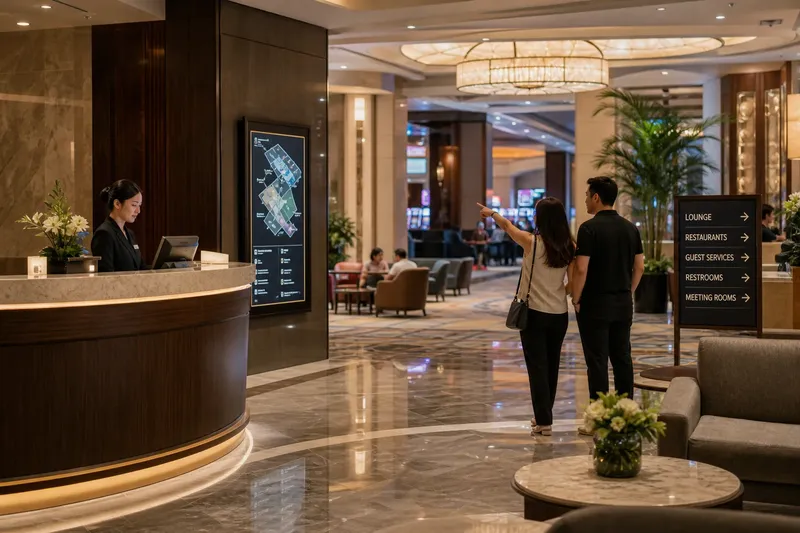
What should a welcome desk do beyond saying hello? In Gia Lai casino hospitality, its more useful role is to make the entrance legible: show how the venue is organized, where shared services sit, and how a visitor can get a question answered without turning arrival into a ceremony.
That work is partly spatial. A guest reads the desk, signs, seating, and paths together, much as a reader takes in the layout of a page before settling on a paragraph. The desk is most effective when it connects those elements rather than trying to carry the whole experience by itself.
Design the first view
From the entrance, visitors should be able to distinguish the welcome desk from nearby service points. A clear desk sign, a readable directory, and an unobstructed route help establish where to begin. Promotional displays belong elsewhere if they cover directions or make the service point hard to identify.
In a venue with several leisure areas, the directory should use the same names as the signs. If one calls a space the lounge and another calls it the guest room, a visitor has to guess whether those labels mean the same thing. Consistent wording makes a shared space easier to understand.
Materials matter because they affect how information is encountered. A wall directory can orient someone who prefers to look before speaking; a small printed map can help a group agree on a meeting point. Neither needs to list every offering. The useful test is whether a visitor can identify the next place or service they need.
Make routes readable
Directions work best when they combine a destination with a visible landmark. “Follow the corridor past the directory to the lounge” is more actionable than “It’s over there.” Where there are multiple floors or zones, say which route applies and make sure signs repeat the same destination name.
A simple wayfinding review can turn vague impressions into decisions. For each item, observe what a visitor can see from the entrance, then choose an action based on that result:
- Desk sign: If the desk name is visible from the approach, keep its placement; if it is hidden by a display, move the display or raise the sign.
- Directory: If the main destinations are legible without approaching the desk, keep the current location; if not, reposition the directory or add a more visible copy.
- Route names: If map labels match corridor signs, retain the wording; if they differ, revise one set so visitors see the same name throughout.
- Meeting point: If a guest can identify a waiting area from the entrance, keep it as the suggested meeting place; if not, select a clearer shared landmark and label it.
- Service handoff: If the next service point is named and its route is clear, direct guests there; if either detail is missing, confirm the destination before sending anyone onward.
- Promotional material: If displays leave essential directions unobstructed, keep them in place; if they block a sign or route, relocate them away from the wayfinding line.
Say a venue’s printed map uses “Lounge,” while a corridor sign says “Guest Room,” and a pair asks where to meet friends. The attendant checks the directory, confirms that both names refer to the same shared area, and gives the route using the sign’s wording. The observable result is a single destination name for the pair to follow; if the labels turn out to identify different places, the attendant should clarify the distinction and direct them to the one they requested.
Support shared use
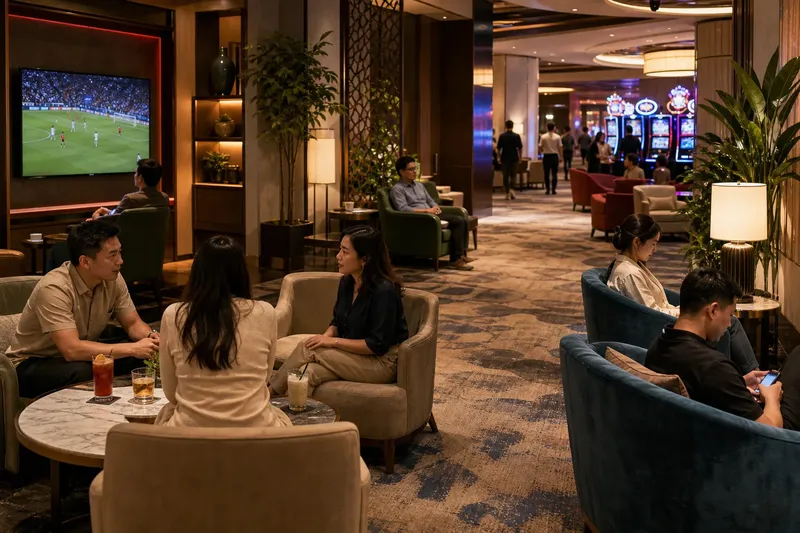
A welcome desk also helps different visitors use common areas without competing for attention. A group may need a place to regroup; a solo visitor may want to consult a directory quietly. Seating, signs, and a visible information point can serve both without requiring the same interaction from everyone.
Keep the approach to the desk clear enough for visitors to stop without blocking the entrance. If a line forms, a sign can direct simple requests to the right counter while staff handle questions that need a conversation. The aim is not to hurry people along; it is to prevent one task from obscuring the next.
Staff should distinguish confirmed information from information that needs checking. For event details, reservations, or current services, use the venue’s current materials or contact the responsible service point. A clear handoff names that destination and explains how to reach it, rather than leaving a guest to search again.
Where should the desk fit?
Should the desk face the entrance?
It should be easy to spot from the approach, though the exact position depends on the room’s layout. If visitors must cross a queue or weave around displays to reach it, reconsider the arrangement.
What belongs on a venue directory?
Include destinations guests need to locate, such as shared leisure areas, restrooms, and service points, using the same names as the signs. Leave secondary detail to staff or printed material that a visitor can choose to consult.
How should staff handle an uncertain answer?
Say that the detail needs checking, then contact the person or desk responsible for it. If the question concerns venue rules or a matter requiring qualified advice, direct the visitor to the appropriate source rather than guessing.
How can a shared waiting area stay clear?
Make its purpose and route visible, and keep essential signs out of the way of seating or promotional displays. If visitors repeatedly confuse it with a queue or service counter, adjust the sign or the layout.
Keep the welcome useful
Gia Lai casino hospitality does not depend on a desk delivering a polished speech. It depends on small, coordinated choices: clear names, readable routes, sensible placement, and accurate handoffs. A visitor should be able to ask for help, use the information on display, or continue without being pulled into a longer exchange.
When reviewing the welcome area, start at the entrance and follow the route a guest would actually take. If the destination becomes unclear, fix the sign, label, or handoff at that point; the best improvement is often the one that removes a needless decision before anyone has to ask.